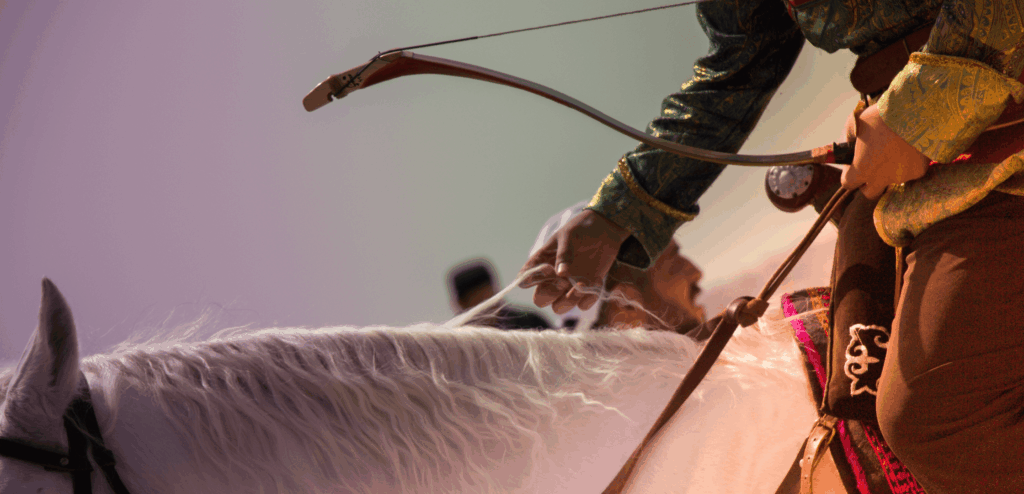
Hungarian Bows · Horse Bows · Traditional Hungarian Archery
This website is being created as a dedicated space for the Hungarian bows and the traditional Hungarian archery culture.
Our goal is to present not only the objects themselves, but the culture, knowledge, and craftsmanship behind them.
What is a Hungarian bow?
The Hungarian bow belongs to the wider family of Asiatic bows, developed and refined over centuries on the Eurasian steppe and in the Carpathian Basin. These bows are known for their efficiency, compact shape, and versatility, and are closely linked to mounted archery, traditional shooting techniques, and historical martial culture.
On this site, we will explore:
- The different types of Hungarian bows and their characteristics
- How Hungarian bows relate to other Asiatic bow traditions
- Historical background, materials, and construction principles
- Practical insights for archers interested in traditional archery
- The difference between modern interpretations and historical forms
A living archery tradition
Traditional archery is not only about history — it is a living practice.
Hungarian and Asiatic bows are used today by recreational archers, historical practitioners, mounted archers, and competitors across Europe and beyond.
Through articles, guides, and visual content, HungarianBows.com will focus on:
- Traditional archery techniques (including thumb draw and Mediterranean draw)
- Equipment choices and setup for Asiatic bows
- Craftsmanship and bow-making philosophy
- Cultural and historical context behind the bows
Coming soon
The site is currently being prepared, and new content will be added progressively.
Our aim is to build a clear, well-documented, and accessible resource for anyone interested in Hungarian bows and traditional archery, whether you are just discovering the subject or already practicing.
Looking to buy a Hungarian bow?
If you are already looking to purchase a Hungarian bow or traditional archery equipment, you are welcome to visit our webshop in the meantime:
There you will find a curated selection of bows, arrows, targets, and accessories related to Asiatic bows and traditional archery.
Hungarian Culture, Language, and Steppe Traditions
Steppe Heritage and the Magyar World
The roots of Hungarian archery lie in the vast cultural space of the Eurasian steppe.
The people commonly grouped today under names such as Huns, Magyars, Avars, and other steppe tribes were never a single, uniform nation, but rather a complex alliance of communities with different roles and traditions.
Warfare was important, but it was not the only valued skill.
Healers, spiritual leaders, craftsmen, musicians, and bowmakers all held respected positions within society.
Archery existed alongside strategy, diplomacy, and spiritual practices — not as brute force, but as a refined discipline.
This balance between martial strength and cultural depth is one of the defining characteristics of early Hungarian archery traditions.
Hungarian Language, Archery, and Cultural Memory
The connection between Hungarian culture and archery goes far beyond weapons and warfare.
It is deeply embedded in language, symbolism, and everyday expressions — traces of a time when the bow and arrow were central elements of life.
In Hungarian, the word arrow (nyíl) appears in many expressions that go far beyond its literal meaning.
The “arrow of the sun” refers to intense light and heat, while the “arrow of God” describes a mischievous, energetic child.
To “shoot all one’s arrows” means to exhaust one’s arguments too early, and the verb nyilall evokes sudden, sharp pain.
Perhaps even more revealing is the verb nyílik — meaning to open, to unfold, or to blossom.
The idea of something opening as if struck by an arrow reflects how naturally archery imagery became part of the Hungarian worldview.
These linguistic traces remind us that archery was once not only a skill, but a fundamental way of understanding the world.
Steppe Heritage and the Magyar World
The roots of Hungarian archery lie in the vast cultural space of the Eurasian steppe.
The people commonly grouped today under names such as Huns, Magyars, Avars, and other steppe tribes were never a single, uniform nation, but rather a complex alliance of communities with different roles and traditions.
Warfare was important, but it was not the only valued skill.
Healers, spiritual leaders, craftsmen, musicians, and bowmakers all held respected positions within society.
Archery existed alongside strategy, diplomacy, and spiritual practices — not as brute force, but as a refined discipline.
This balance between martial strength and cultural depth is one of the defining characteristics of early Hungarian archery traditions.
Attila and Historical Memory
Among the most well-known figures associated with this era is Attila, ruler of the Hunnic Empire in the 5th century.
Historical sources describe him in sharply contrasting ways — from ruthless conqueror to restrained and pragmatic leader.
What is clear is that his empire stretched across enormous territories, and that his leadership left a lasting impression on both allies and enemies.
Later portrayals often reflect the perspective of defeated powers rather than objective reality, which makes Attila as much a figure of historical interpretation as of fact.
For Hungarian cultural memory, this period represents not destruction, but the emergence of a powerful steppe identity rooted in mobility, archery, and strategic thinking.
Bows, Technology, and Military Innovation
Contrary to popular Western stereotypes, steppe societies were not technologically primitive.
Their military success relied on advanced composite bows, refined tactics, and a deep understanding of materials and mechanics.
Hungarian bows evolved within this broader Asiatic tradition.
At certain historical moments, external influences — such as those introduced by Mongol and Cuman archers — brought new technological ideas that reshaped local bow design and battlefield equipment.
These encounters were not signs of weakness, but part of an ongoing exchange of knowledge across the steppe world.
The Hungarian Quiver Tradition
One of the most distinctive elements of Hungarian archery equipment is the tegez, the traditional quiver.
Early Magyar quivers were worn on the belt, with arrows carried point-up — a practical solution adapted to mounted archery.
Over time, quiver design changed in response to new techniques and influences from Central Asia.
Long protective quivers allowed safe transport of arrows, while shorter “standby” quivers made rapid drawing possible in combat.
These designs reflect a constant balance between protection, speed, and efficiency — values that remain central to traditional archery today.
Hungarian Recurve Bows
European sources first encountered the Hungarians in the 9th century, during the campaigns in the Carpathian Basin.
By the 10th century, Hungarian warriors were already widely known across Europe for their mobility, horsemanship, and highly effective use of the bow.
At the heart of this military advantage stood the recurve bow — the most advanced ranged weapon of its time.
Compared to contemporary Western bows, Asiatic-style recurve bows offered significantly greater range and efficiency, allowing mounted archers to engage opponents from distances that were largely unreachable for their enemies.
This superiority was not unique to the Hungarians alone.
Similar recurve bow forms were used across the vast Eurasian steppe by various mounted cultures stretching from Mongolia to the Carpathian Basin. Despite regional differences, these bows shared the same core principles: compact design, powerful energy storage, and effectiveness from horseback.
For Hungarian warriors, the recurve bow was not merely a weapon, but an integral part of a broader steppe military system — combining speed, distance, and tactical flexibility.
This tradition laid the foundation for what we now refer to as Hungarian recurve bows, a form that continues to influence modern Asiatic bow design.
A Living Tradition
Hungarian bow making is not only a historical legacy — it is a living craft, actively practiced and refined today by bowyers whose work is recognized far beyond Hungary.
For more than three decades, Hungarian bow making has been shaped by craftsmen who combine historical research, practical archery experience, and continuous experimentation.
Among the most influential figures of this living tradition are Grózer Csaba, Szimeiszter István, and Kassai Lajos — all of whom have been making bows in Hungary for over thirty years.
Forms and bow types in modern Hungarian bow making
Contemporary Hungarian bowyers work with a wide range of forms rooted in Asiatic traditions, each serving different purposes and shooting styles:
- Hungarian bows
Generally longer and smooth-drawing, reflecting Carpathian Basin traditions. These bows are versatile and well suited to both Mediterranean and thumb draw techniques. - Steppe and Asiatic recurves
Compact and efficient bows inspired by steppe cultures, emphasizing speed, maneuverability, and dynamic handling. - Mongol and Tatar-style bows
Featuring pronounced recurve profiles and strong siyahs, optimized for fast arrow delivery and powerful cast. - Persian and Indo-Persian forms
Typically longer and more refined in limb geometry, favoring stability, elegance, and a smooth energy curve. - Horseback archery bows
Shorter bows designed specifically for mounted use, prioritizing clearance, fast handling, and consistent performance under movement.
These forms are not static reconstructions.
Modern Hungarian bow makers adapt historical geometry using contemporary materials and laminated construction methods, while preserving the essential principles of traditional Asiatic bows.
Craftsmanship and continuity
What unites these makers is not a single school or model, but a shared approach:
bows are developed through long-term practice, close cooperation with archers, and continuous refinement rather than mass production.
Hungarian-made bows are used today by traditional archers, mounted archers, and competitors worldwide — clear proof that Hungarian bow making remains an active, evolving tradition.
More in-depth articles, visual resources, and practical insights will be added progressively.